Puzzles built from your own blunders
Not a generic tactics database — the exact position you misplayed.
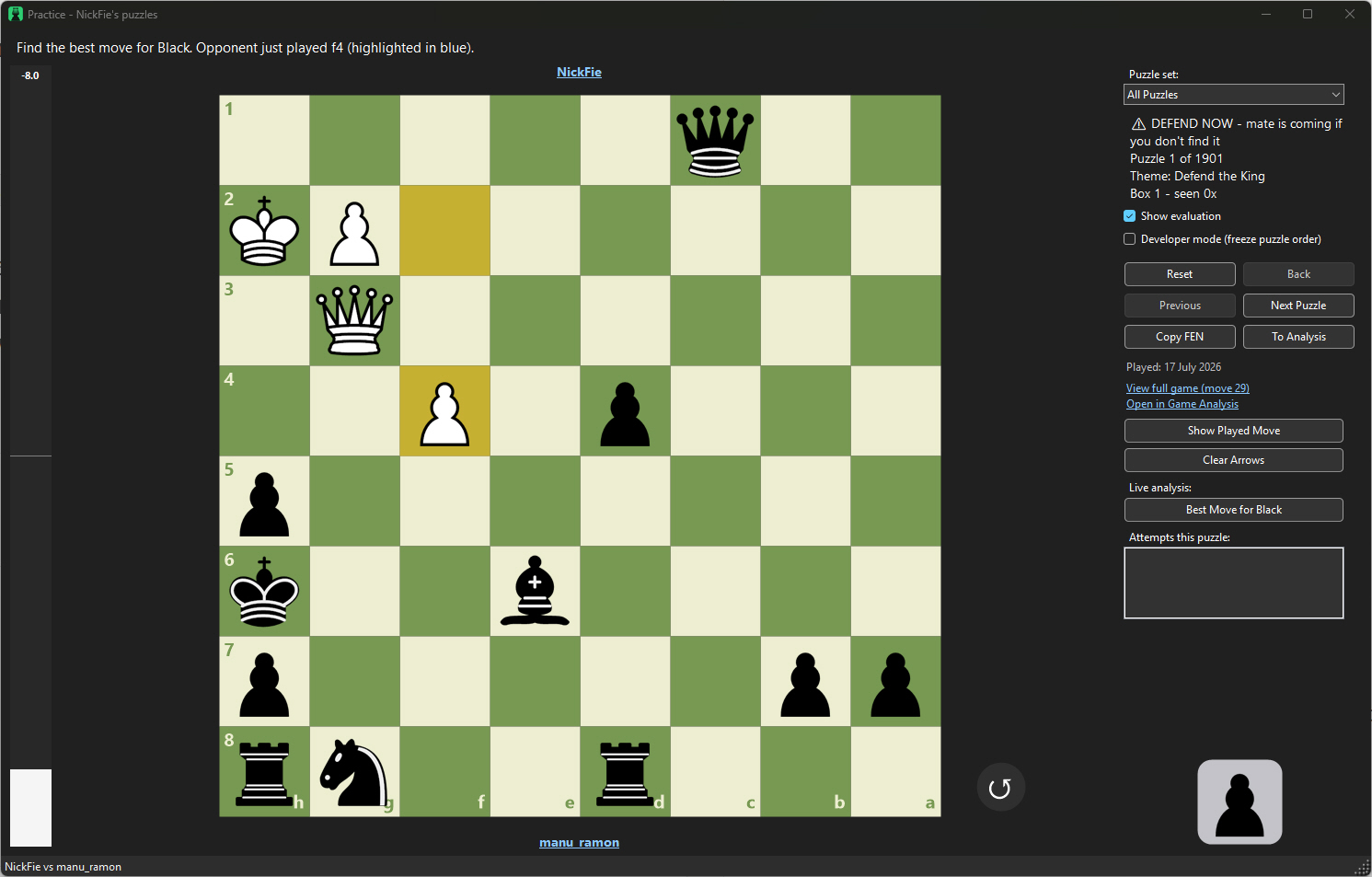
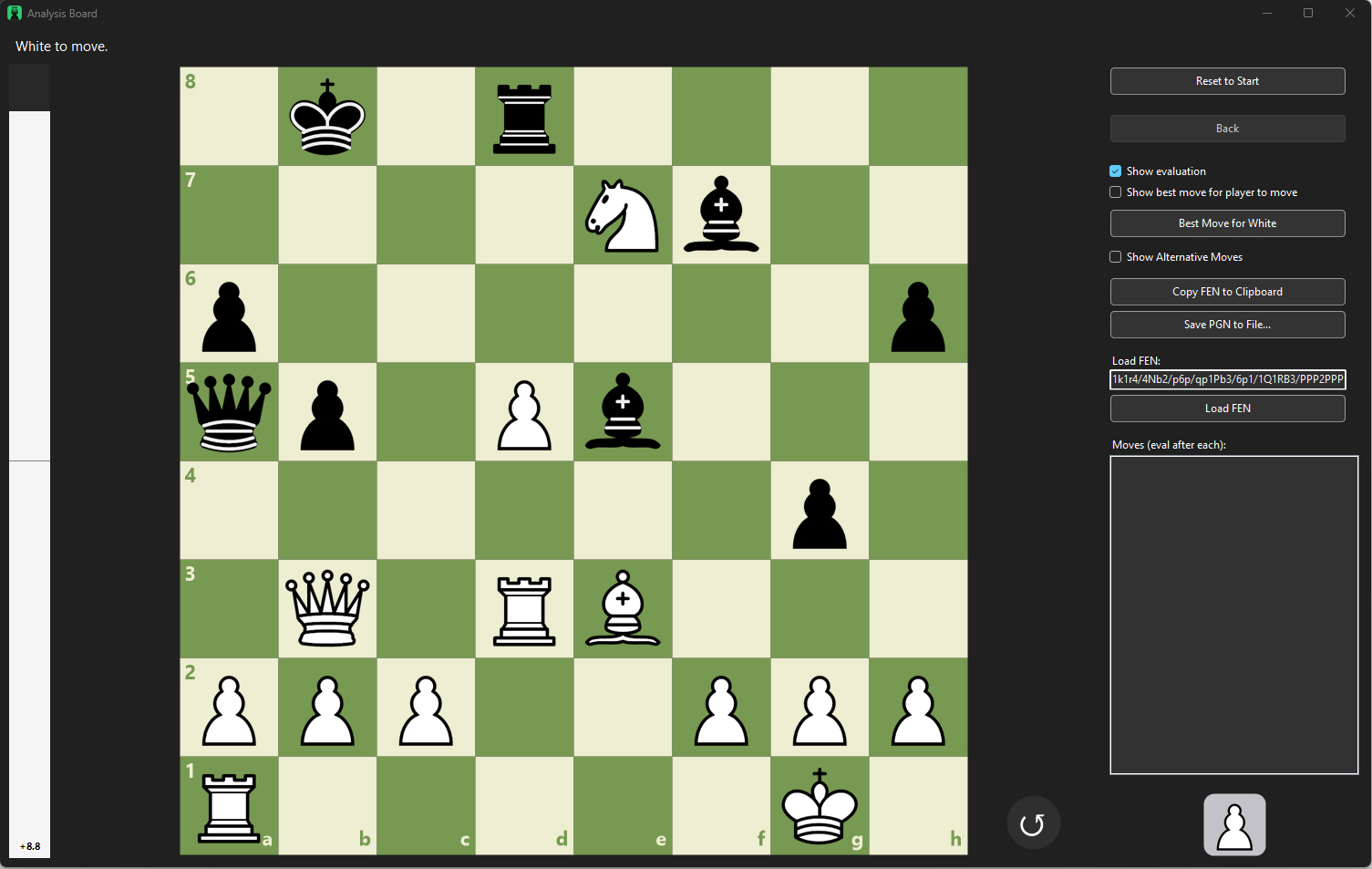
Every analyzed game that contains a blunder above your own threshold turns those moments into puzzles automatically. You get the position right before the mistake, replayed against you with a live evaluation bar, so the lesson sticks to something you actually did rather than a pattern lifted from a stranger's game. Misses are scheduled with a Leitner-box spaced-repetition system: a puzzle you get wrong comes back sooner, one you keep getting right drifts further out, and the newest, most-missed puzzles are reviewed daily.
Exams & Survival Challenges
A different kind of test: single-attempt exams that grade you against theory, and short survival drills that grade you against the engine from an unscripted position.
Opening Coach (see the Openings page) is for learning a repertoire — mistakes get taken back with feedback, and you can retry. The Exams below are graded differently: each is a one-shot test with a clear pass/fail verdict, for when you want to know where you actually stand rather than drill toward a line you already half-know.
Five Moves No Mistakes and Six Moves No Mistakes are shorter, repeatable survival drills rather than a one-shot exam. The opponent opens with two fully random legal moves — genuinely anything technically possible, not just sensible opening theory, so the position you're handed is different every time — then switches to the engine's own best move for every move after that. Your job is to find your own best reply, five or six times in a row, while staying under a single running budget for how much you're allowed to lose along the way.
That budget isn't a flat number of pawns. It's measured in win probability rather than raw centipawns, so the same size slip counts for less once the position is already decisive — say, the opponent's random opening already blundered a pawn or more — and counts for more in a close position, where every centipawn is doing real work. It's the same win-probability curve behind ChessMend's own move-accuracy grading elsewhere in the app, not a separate invented scale.
A genuinely fresh start each time
The opponent's first two moves are picked uniformly at random from every legal move — not a weighted "reasonable" opening — so no two attempts start alike.
Graded on win probability, not raw pawns
A single running budget across all your moves, scaled to how much is actually at stake in the position — not a flat cutoff regardless of context.
Play on after the verdict
Passing or failing doesn't end the game — the board stays live afterward as free play against the engine, no longer graded.
Show Best Move & Undo Last Move
Both are available mid-drill for when you want to explore rather than test yourself — using either during a graded move fails that attempt, on the spot.
Try Again vs. Next Challenge
Try Again replays the exact same random opening so you can attempt it again with a different plan; Next Challenge rolls a completely fresh one.
Automatic Opponent Move, off
Also available in Opening Coach: turn this off to play a move for the opponent yourself — say, an unexpected capture — instead of the coach always finding its own best reply.
Daily Puzzle Challenge
A fresh themed set every day, with its own streak history.
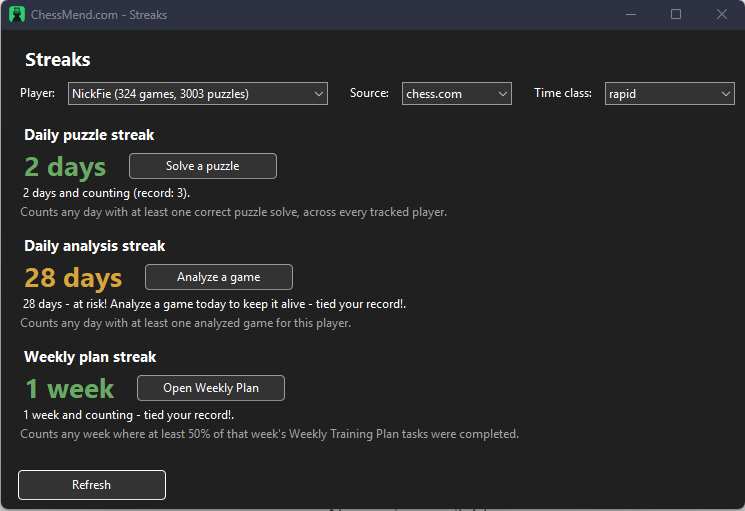
Alongside open-ended practice, a Daily Puzzle Challenge assembles a themed set each calendar day — separate from your main blunder backlog — with its own history view so you can track how many days in a row you've kept it up, not just a vague feeling that you've been "pretty consistent lately."
A Leitner box, not a fixed queue
Misses come back sooner; mastered puzzles drift further out automatically.
Daily Puzzle Challenge
A fresh themed set every day, with its own streak history separate from your main backlog.
Practice by tactical theme
Filter down to one theme — forks, pins, back-rank — and grind it until the pattern is automatic.
Puzzles by player
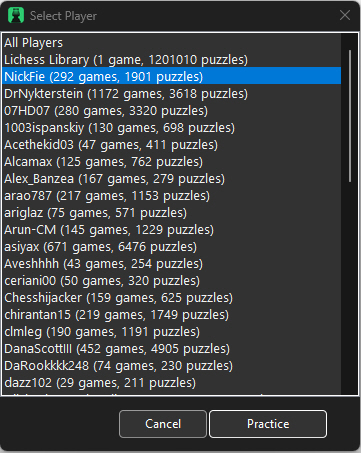
Track more than one person's games — yourself, a student, a training partner — with puzzles grouped per player.
Blunder screenshots & video
Export a blunder as a screenshot or short video clip — handy for sharing a lesson or a "how did I miss this" moment.
Streaks & a progress timeline
A chronological view of auto-detected milestones — first analyzed game, puzzle-count round numbers, biggest rating jump.
Explore the rest of the app
Opening Coach & Stats
See which openings win or lose you games, then drill a repertoire against a coach.
Import & Game Review
Unlimited Stockfish analysis and coaching notes on where your rating leaks.
Puzzles & Spaced Repetition
You're here.
Bots & Opening Traps
An adjustable engine opponent and twenty scripted trap-heavy openings.